
Buying a Resale Condo in Pattaya
Buying a resale condo in Pattaya: what the building can tell you
At the viewing the balcony looks out to the sea, the air conditioning is already running and the agent has parked beside the lobby. If you buy the unit, you will normally arrive through the gate, hunt for a space at whatever hour you get home and wait for the lift with everyone else. Begin the viewing there. The rooms you share with the rest of the building often tell you more about the purchase than the freshly painted rooms in the listing.
Street to lobby: view the address you will actually use
A Jomtien listing may be a short walk from the beach along one route while the vehicle entrance puts you on a different road. Start at the door you will use and walk to one everyday destination. On the way back, note the crossing and the stretches where you share the carriageway. Pattaya City’s public camera directory includes cameras around Jomtien and Dongtan. It can help you identify a junction or see road conditions when the relevant camera is available. A camera cannot tell you whether the last part of your side street is passable or how the building’s own garage performed during a storm.
In Pratumnak, treat the slope as part of the route. A five-minute walk down to the coast is a different proposition on the way back with groceries, especially if the pavement is uneven. Around Wongamat and Na Kluea, draw the route to the places you will go when you are not on holiday. A relatively quiet balcony may sit above a busy pick-up point or a lane that narrows where cars meet. Return during the busiest part of the day you expect to use the entrance. The exact gate matters more than a district-level rule of thumb.
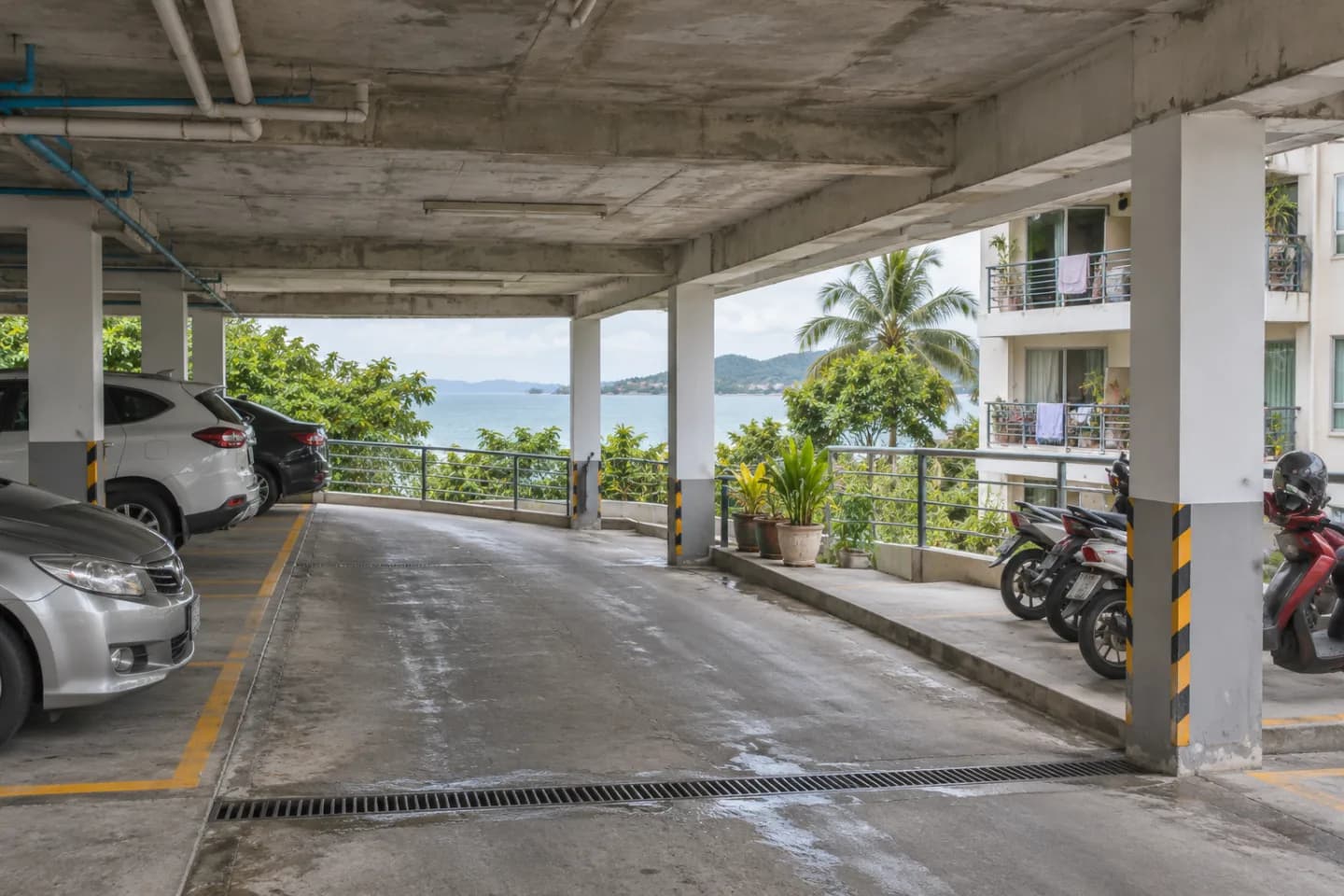
Enter the garage as an owner would. Find out whether the space the agent used is assigned to the unit, shared, reserved for visitors or available by separate registration. Follow the ramp from the road and look at the visible drain and pump arrangements, then ask management about dates for past closures or clean-up. If only the upper garage deck was affected by a gate failure, that is a different repair from floodwater reaching equipment below grade. Records and dated photos can help distinguish them.
Lift to unit: separate a cosmetic defect from a building problem
Ride the lift from the parking level and use the exit stairs where access is permitted. A second lift closed for maintenance may be routine. A log showing repeated closures with long waits for parts belongs in a different category. Find out how many lifts serve the floor, which is used for moves and how someone with limited mobility gets through the entrance while one is out.
Inside the unit, compare weather-exposed fittings with sheltered ones. Check the door track, balcony outlet, railing fixings and condenser support. Coastal exposure can make corrosion or failed seals relevant to the budget. A photograph is a prompt for an inspection, especially if a fastening or support is involved. Inside, run taps with permission, look at the wall below the terrace door and see whether affected surfaces line up with a pipe or an exterior joint. A new coat of paint tells you little about the water’s route.
The first question about a defect is where the cause sits. Replacing swollen skirting seems straightforward if the cause was a plumbing leak that is now fixed. It is harder to price if water still comes through a façade joint that the building needs to repair. In a resale, ask for dated work records and the building’s written position on who owns or is responsible for the affected element. A seller’s quote to repaint inside the unit cannot resolve an exterior leak.
The management office is part of the viewing
Take the unit number and the seller’s permission to request documents. The current unit statement shows charges for that unit. Recent minutes and the annual financial statements help you see where the building is heading. Look for several versions of the same project: discussion, bids, approval, signed work and the payment schedule. An estimate in meeting notes and an assessment due next month can look equally alarming in a forwarded message. They change the purchase decision in different ways.
Here is a hypothetical first-year comparison, before transfer and financing. Unit A costs ฿3,200,000, with ฿95,000 of immediate repairs, ฿24,000 in annual common fees and a confirmed ฿65,000 assessment allocated to the buyer. That comes to ฿3,384,000. Unit B costs ฿3,320,000, with ฿20,000 in repairs and ฿36,000 in annual common fees, for ฿3,376,000. The purchase-price gap of ฿120,000 has become an ฿8,000 difference in the other direction. Put unapproved works in a separate scenario and get the actual unit amounts in writing. The condo common fees guide shows how to read the invoice, reserves and resolution together.
| You observe | The corresponding record | Why it changes the offer |
|---|---|---|
| One lift closed on both visits | Service log, bids and any replacement resolution | Establish whether there is a recurring outage and whether funding is in place |
| Moisture by the balcony door | Repair records, inspection and written responsibility | Price the cause as well as the visible damage |
| Scarce parking after work | Current rules and any allocation for the unit | Confirm that your intended use is possible |
| A newly resurfaced garage | Scope, payment history and drainage records | Distinguish completed routine work from an unresolved water issue |
Before paying, prove that this particular unit can transfer
The registered condominium, unit number, title, seller and any mortgage must match the transaction. A foreign buyer also needs a qualifying basis for ownership and evidence for the specific transfer. The Thai Condominium Act generally limits foreign ownership to 49% of the combined unit area in the registered condominium, rather than 49% of the number of units. Ask the juristic person for written information on the proposed transfer and have an independent Thai lawyer confirm the title, eligibility, payment evidence and any remaining conditions. A building’s overall figure in a listing is not confirmation of the registration you intend to make.
The Department of Lands’ explanation of section 29 describes the certificate for clearance of qualifying common-expense debt at transfer. A current certificate answers that question. An assessment falling due after transfer, a parking permit and an unresolved repair may each need separate written treatment.
If the offer depends on confirming the ownership route or a serious repair, identify the evidence and deadline before any reservation payment. The buyer and seller should both understand what will happen to the deposit if the evidence falls short. On a return visit, follow the same route without the agent directing you: street, parking, lift and unit. If a recurring problem shows up again, use the records to decide whether you can price it or whether it changes which building belongs on the shortlist.
How this guide was prepared
oyopo prepared this buying guide using the linked records and guidance. Illustrative properties and figures are identified in the text. For an actual purchase, use the documents, measurements and professional advice for that address.