
Buying a House in Rayong
Buying a house in Rayong: the commute that matters starts at the gate
A house in Mueang Rayong can be an easy choice for someone who spends most of the week in town. The same address may be inconvenient for a household starting shifts at different industrial estates. A house near the coast can introduce a third pattern, where a road that works on workdays fills with beach traffic at weekends. Before comparing floor plans, put the two or three trips you cannot easily change on the calendar.
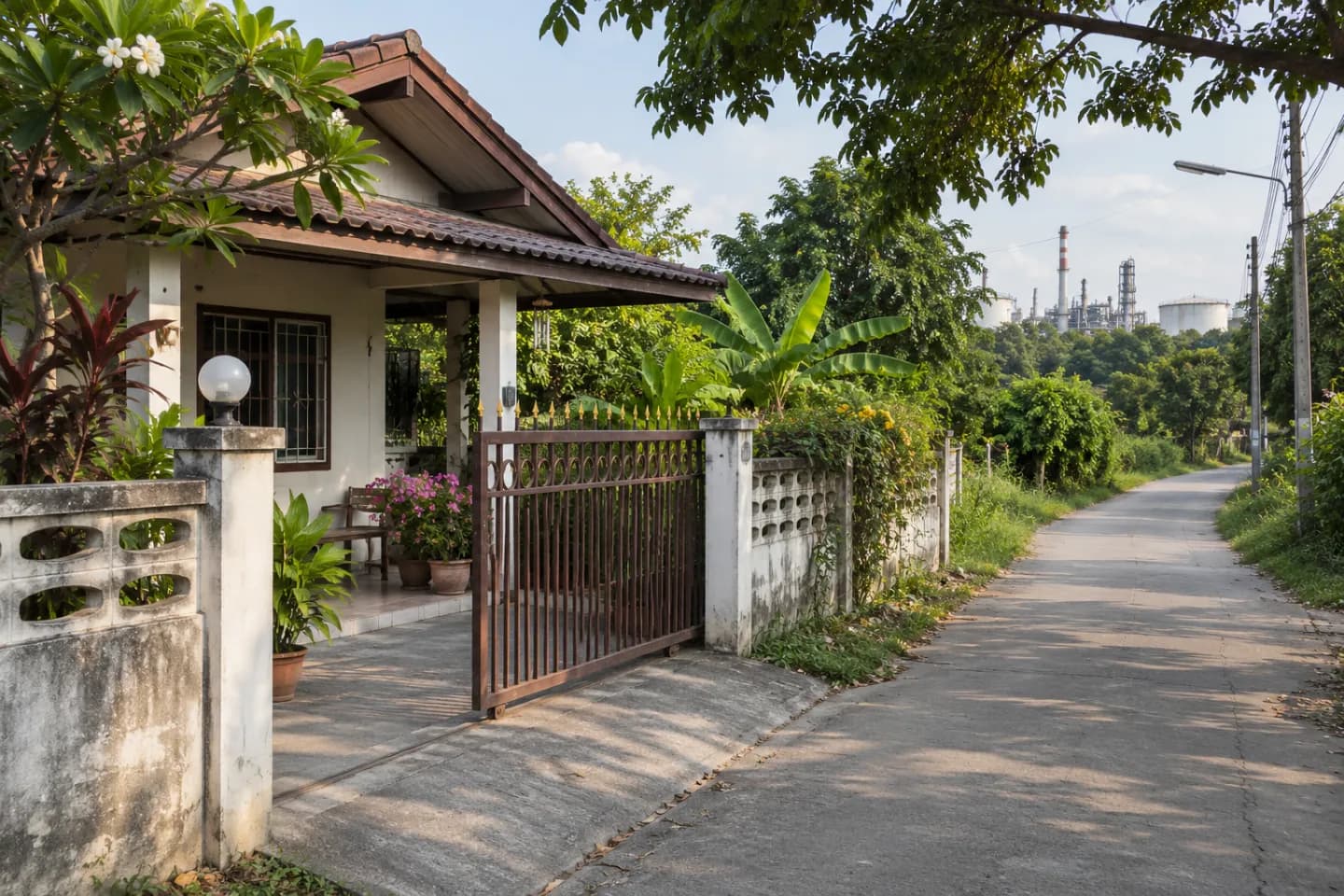
Use the employee entrance as the destination
“Close to Rayong industry” is too broad to put into a buying decision. The Industrial Estate Authority’s Map Ta Phut estate listing locates its office in Map Ta Phut, while the authority lists the Eastern Seaboard Industrial Estate separately. Even within one estate, an office pin can be some way from the gate and parking area an employee actually uses. Choose the precise entrance for each employer and include the time between reaching that entrance and starting work. Test the return as well. The turn that is easy heading in may involve crossing heavy traffic going home.
For a town-based household, put the same effort into an ordinary afternoon. Drive or walk from the address to the place you expect to use most on weekdays. If one adult needs a car for work, repeat the route the other person would need without it. A house inside a gated community may be less accessible on foot than a map suggests, especially if the pedestrian exit and vehicle gate are on different roads.
Around Ban Chang, start with the direction you actually travel. A house convenient for a westbound journey may have little advantage if your work and school are both on the other side of the address. On the coastal side, including routes around Mae Ramphueng and Ban Phe, test local journeys when you would actually make them. A waterfront drive on a quiet viewing morning does not tell you where you will buy groceries after work or whether you can turn into your lane when roadside parking fills up.
Plot the two trips that compete
Suppose one buyer works four days a week at a plant and another needs to get to town three times. Write down both round trips for both shortlisted addresses and count the visits. The following timings are invented to show the arithmetic. Allow separately for school drop-off, gate queues or a trip usually combined with another errand.
The plant-side house only saves half an hour a week across the two people, even though each plant trip saves 24 minutes. If the plant worker changes shift or the household adds one regular trip into town, the comparison can move again. Record the unusually long run as well as the typical one. A route that was slow once because of a crash is different from a route that queues every weekday at the hour you have to leave.
| Round trip or recurring weekly total | Town-side house | House closer to the plant entrance |
|---|---|---|
| Plant round trip, four times | 52 minutes | 28 minutes |
| Town round trip, three times | 22 minutes | 44 minutes |
| Total for those seven trips | 274 minutes | 244 minutes |
At the house, take sound and air observations separately
Turn off the indoor fan briefly and stand in the room you would sleep in. Repeat with the window open and closed. Identify equipment, road traffic and loading areas separately. A noise heard during shift change may disappear later. An overnight compressor or a road used at dawn can have the opposite pattern. A return visit at the relevant hour helps you work out what to investigate further.
The Pollution Control Department’s 2024 national pollution report includes monitoring of volatile organic compounds in Map Ta Phut and surrounding areas. Use the report to identify what was measured and at which locations. A station result neither measures the air inside a specific house nor gives a complete history of odour or noise at its gate. Look for the most recent applicable station data and ask about specific, dated incidents if residents mention them. Where environmental exposure could change your purchase decision, get a qualified adviser to relate the available evidence to the location and intended use.
Near the coast, water and exposure deserve separate repair estimates. A damaged balcony seal can admit rain. Corrosion on an air-conditioning support or other exposed fitting may instead affect safe use or replacement cost. Compare weather-facing surfaces with sheltered ones and have a building inspector trace the cause before valuing a cosmetic repair.
Rain can close a route without entering the living room
Begin with the last turn off the public road. Identify the lowest section between there and the gate and where an alternative would go. Inside an estate, walk its drains to the visible outlet where access is permitted. Find out whose responsibility the roadside ditch is and whether the estate maintains any pump or culvert. A shared road may have worked for years while one neighbour dealt with blocked drains informally. Ask what the documents say and who paid the last bill.
Compare the lowest thresholds with the road, parking and adjoining plots. Evidence of past water should be dated and placed against those features. The property flood guide explains how to compare the route, historical records and what a survey can establish. For a vacant plot, have any planned filling, retaining and drainage work costed together. The cheap option can stop being cheap if the outlet crosses private land or if the entrance needs rebuilding to use it.
Make the offer reflect the actual address
Give each house a short evidence sheet: travel times from door to actual destination, one repair estimate that could change the budget, one documented point about access or flooding, and the seller’s papers for the land, building and alterations. The Department of Lands’ parcel lookup is useful for locating the deed reference before professional review. It is not a substitute for matching the registered property and boundaries to the site and verifying access.
Ask your independent Thai lawyer to connect any unanswered decisive issue to the proposed agreement before payment. If a second exit is crucial, establish who can use it. If an extension matters to the price, compare the building records with what is on site. Then repeat the trip that made the property worth shortlisting in the first place, from the actual gate at the hour you will use it.
How this guide was prepared
oyopo prepared this buying guide using the linked records and guidance. Illustrative properties and figures are identified in the text. For an actual purchase, use the documents, measurements and professional advice for that address.