
Buying an Off-Plan Condo in Thailand
Buying an off-plan condo in Thailand: read the contract alongside the payment calendar
The reservation form calls it unit 1208. The floor plan has no revision date. The payment sheet says the balance is due “on completion.” Before signing, put those three pieces of paper beside one another. Completion could mean the developer has finished building, the unit is ready for inspection, or the Land Office is ready to register ownership. Those events can fall on different dates, with different implications for the money you have already paid.
Before the reservation: establish what the payment secures
Identify the legal entity taking the money and the unit that is being held. The unit reference, tower, floor, orientation and plan should agree. Find out when the reservation ends, how the payment is credited and what the form says if the parties never reach a sale agreement. A quotation showing the rebate and furniture package belongs in the file alongside the reservation terms. The person handling the sale may work for an agency rather than the company that signs the contract. Verify any payment instructions through a known channel.
Where an environmental assessment is relevant, use the official Smart EIA Plus register to look up the project. Match the project entity, location and phase rather than relying on a marketing name. Note the status and date, then ask the developer for the underlying documents and which other approvals the project needs. An EIA entry and a local building approval serve different purposes. If the record is unclear, have an adviser confirm the position before the first payment becomes committed.
Before the contract payment: identify which promises carry through
Sections 6/1 and 6/2 of the Condominium Act address advertising and prescribed sale-agreement terms in relevant developer transactions. Bring the advertisements and signed drafts to independent Thai counsel. An email promising a fitted kitchen and an attachment listing only capped utility points should be reconciled before you sign. In particular, put a revision date on the unit plan, the specifications and any schedule of facilities or equipment that affects your decision.
Mark which changes the contract allows the developer to make and what happens if the registered area differs. The difference may affect the final balance, layout or usefulness of a room. For example, if an agreement adjusts price by an illustrative ฿110,000 per m², a variation of 1.2 m² implies ฿132,000 under a simple full-area adjustment. The actual result depends on the contract, including any permitted tolerance, defined area and treatment of a shortfall. Have counsel identify the calculation and remedy in the agreement you will sign.
Where foreign ownership is intended, identify the buyer’s qualifying route, the documents the bank can issue and what the developer can confirm about the proposed foreign-quota allocation. Later registration depends on the statutory requirements and evidence for the transfer. Confirm what happens to any instalments if that ownership route cannot proceed.
While it is being built: put conditions beside dates
Consider a fictional ฿5,000,000 purchase with a ฿50,000 reservation payment credited to the price, a further ฿450,000 at signing, ฿1,000,000 in instalments and a ฿3,500,000 balance. The numbers illustrate exposure over time rather than a recommended payment schedule.
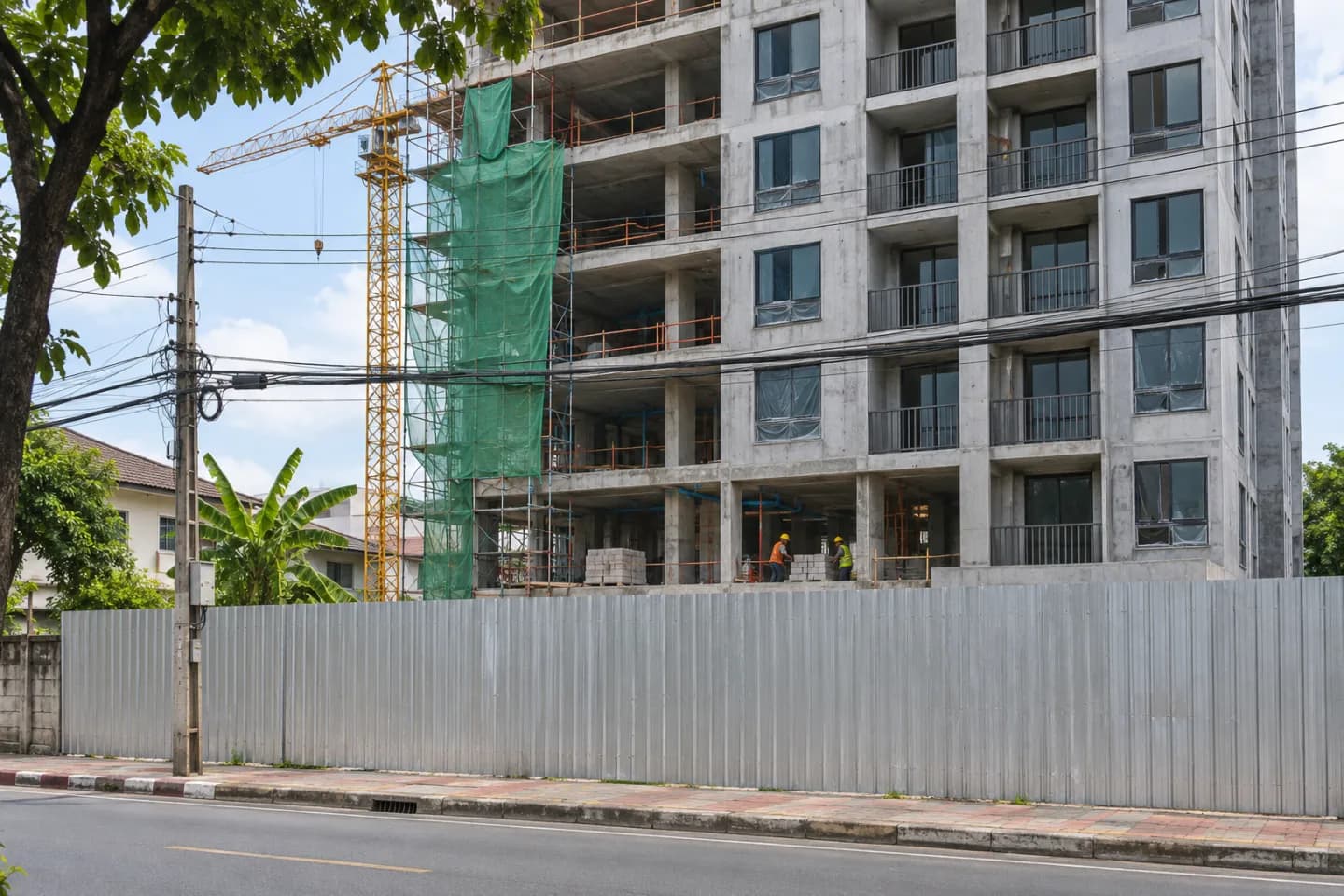
The payment dates may be fixed, linked to construction milestones or a mixture. The contract should explain how a milestone is established, who gives notice and what happens if a call arrives earlier or later than expected. A dated progress photo can help identify what is being discussed. It cannot settle whether the contract permits a payment call. Track instalments against the actual clauses and keep payment references and receipts. If a developer proposes an amended schedule, compare the old and new payment exposure and ask counsel to review the change before agreeing.
| Event | Total paid so far | What makes the next payment intelligible |
|---|---|---|
| Reservation | ฿50,000 | Exact unit, payee, expiry and written refund or credit terms |
| Sale agreement signed | ฿500,000 | Final attachments and the agreed conditions for subsequent payments |
| Instalments completed | ฿1,500,000 | Evidence supporting any milestone-based call and receipts matching the ledger |
| Final balance and registration | ฿5,000,000 | Written inspection status, balance calculation and evidence for transfer |
If handover moves, calculate the cost before responding
Suppose the intended move shifts by four months and the buyer pays ฿24,000 a month to extend their accommodation. That adds ฿96,000 before storage, changes to financing and other costs. Those are household costs. Whether the developer owes anything for delay is a separate contract and legal question. Identify the promised date, any permitted extensions, notice requirements, remedy and longstop or termination provisions. A reservation presentation that gives a quarter of the year may not address those points.
Separate three dates on your calendar: inspection, occupation and title transfer. Verify how to record defects, when the developer must respond and how rectification is confirmed. If the unit has pending items, have the lawyer explain how signing, payment and transfer interact before making a decision about acceptance. Neat finishes do not establish that the transfer is ready. A ready transfer does not prove that the inspection found no defects.
At the last payment, reconcile four totals
Read the purchase price, prior payments, agreed adjustments and transfer-day charges as distinct lines. Track any balance change caused by measured area, and separate building charges or fund contributions from registration fees. The condo costs guide explains how to identify those building charges. The reservation and deposit guide covers how to write a condition around evidence you are still waiting for.
Walk the actual unit with its approved and contracted documents. Verify the unit, paid items, available utilities and documented repair status. Obtain the relevant handover and registration records. A clean ledger should show what each payment bought and which documents proved it. If a line still says only “on completion,” this is the time to establish exactly what has completed.
How this guide was prepared
oyopo prepared this buying guide using the linked records and guidance. Illustrative properties and figures are identified in the text. For an actual purchase, use the documents, measurements and professional advice for that address.