
Buying Vacant Land in Thailand
Buying vacant land in Thailand: the price of a plot you can build on
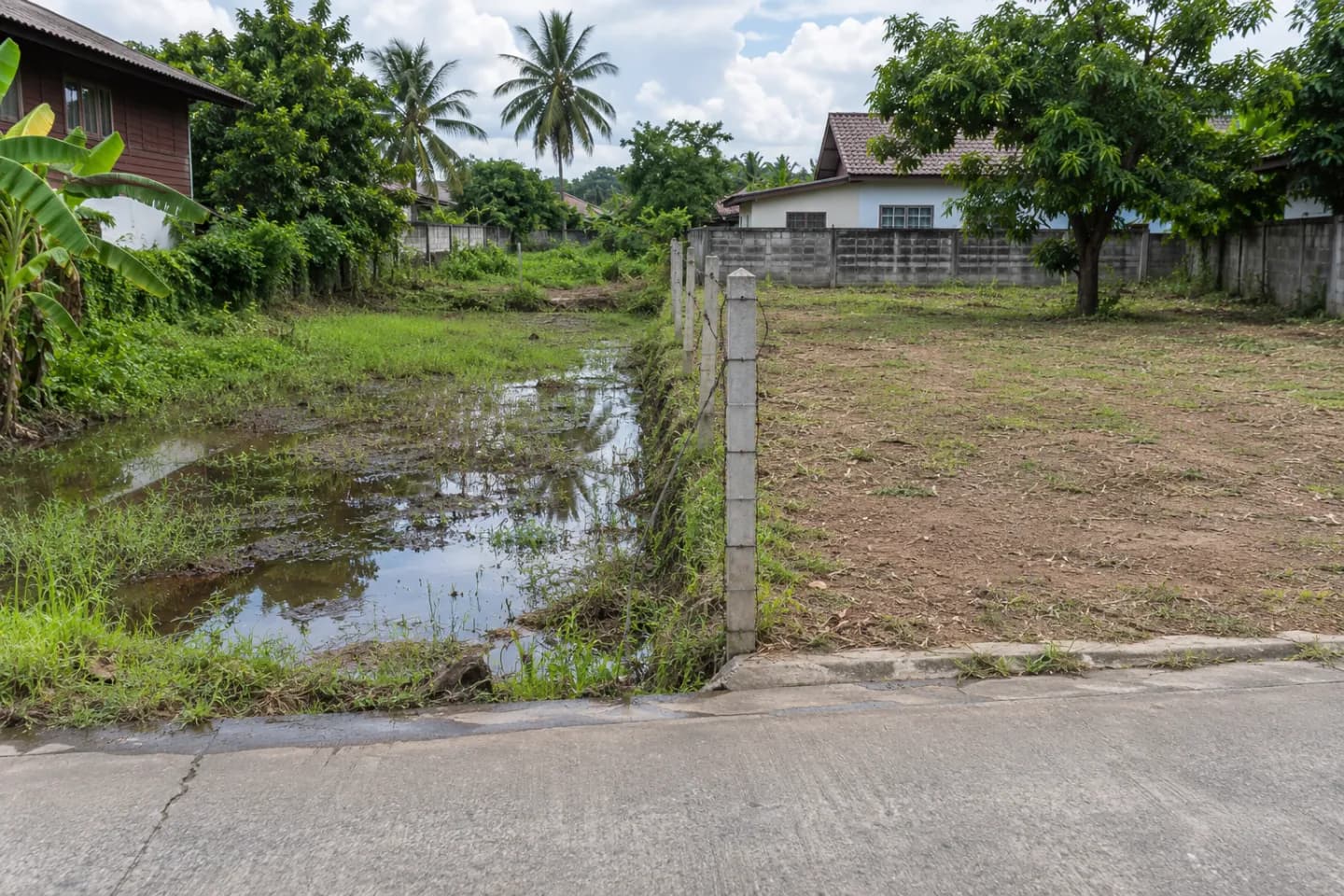
Plot A costs ฿1,450,000. Plot B costs ฿1,850,000. On the listing pages both look large enough for the house, driveway and garden. At the site, Plot A lies below the road and the electricity provider has yet to identify where it would connect. Plot B costs more today, but it is the easier one to price. Compare them at the point when each could receive the same building contract.
First draw what you would actually buy
Two plots advertised at 800 m² may have the same registered area and very different proportions. The buyer may use part of one for a shared access route or need to leave space for water to pass. A narrow neck of land can connect the rest of the plot to the street but leave nowhere to turn a vehicle. Put these features on the survey before dividing the asking price by an area that looks more useful than it is.
Identify the exact title or titles and locate the gate and physical boundaries. The Department of Lands parcel lookup helps locate land from its identifiers. Where markers are missing or the fence and the record disagree, arrange an appropriate boundary review before using the dimensions for design or pricing. If there are two titles, see whether both are needed. The smaller parcel might provide the only access or contain the spot where the utility line has to cross.
Keep three figures distinct: registered area, area you can use as planned after site constraints, and the area and dimensions that can accommodate the proposed building after applicable rules. The latter two depend on the survey and proposal. For a first pass, draw the structure, a vehicle turning path and the drainage outlet together. The buildability guide shows which parts of the result the local authority can confirm.
What the contractor is actually pricing
A lorry of fill is a delivery unit. A driver, a contractor and a designer may each use a different figure for the volume involved. The buyer wants to compare completed work at an agreed level. A sketch with a 400 m² platform raised by an average of 0.6 m gives a rough geometric volume of 240 m³. That calculation excludes side slopes, stripping, unsuitable ground, compaction and settlement. It also excludes the area around the platform where water must still be managed. Use it to test whether two quotations describe the same work, with the final quantities and specification set by the relevant professionals.
Walk the lower boundary before accepting any increase in finished level. Identify where water comes onto the site and where it can leave without causing problems for neighbouring land. There may be local requirements for earth filling and drainage, including notification where applicable. The Ban Suan municipality’s earthworks guidance explains the national framework and the role of local thresholds. Confirm the procedure at the authority serving your own site before treating earthworks as ready to start.
Utility quotes need a route and a defined end point. Does the electrical estimate end at the meter or at the proposed house? Can the water supplier confirm the connection point, or does the estimate assume a private system? When a proposed line crosses private land, clarify the right to install and maintain it. The utility connection guide walks through the written confirmations that turn a nearby line into a cost you can use.
Run the numbers twice
Here is a fictional comparison for two parcels at the same stage of design. The numbers illustrate a purchasing decision rather than local price levels. The house contract is held constant so that the difference in land and enabling work stays visible.
The ฿400,000 difference in asking price turns into a ฿30,000 advantage for Plot B on these assumptions. If Plot A’s provider confirms a cheaper route saving ฿90,000, it becomes ฿60,000 cheaper. If the same proposed route crosses land the owner will not permit you to use, the result is an unresolved condition. A larger contingency does not establish a route.
For the second calculation, change the assumption you least trust. Price a different foundation approach if the soil investigation warrants it. Price the longer route if the short route needs permission. List any additional costs separately, including fees, financing, final design, wastewater, storage and reinstatement where they have not already been included. The useful result is a range with the reasons for its movement.
| Before house construction | Plot A | Plot B |
|---|---|---|
| Land price | ฿1,450,000 | ฿1,850,000 |
| Survey, soil investigation and early design | ฿95,000 | ฿95,000 |
| Ground preparation and drainage | ฿340,000 | ฿90,000 |
| Access works | ฿120,000 | ฿25,000 |
| Utility connection allowance | ฿150,000 | ฿65,000 |
| Subtotal before transfer costs, finance and contingency | ฿2,155,000 | ฿2,125,000 |
Turn the notes into an offer
Before negotiating, give each unresolved line an owner and an outcome. A local authority response can address the intended use. The survey can address a boundary question. A provider can identify how a connection would be made. The contract can identify what the seller must provide and when, and how a deposit is handled if the evidence is unavailable. Agree those points with independent Thai counsel before paying.
A sensible walk-away point can be a cost ceiling or a missing right. Keep both visible. If Plot A becomes competitive when a written connection quote arrives, the decision can be revisited. If it stays cheap only because the road, drainage or design is still unresolved, the spreadsheet has shown you where the next visit needs to happen.
How this guide was prepared
oyopo prepared this buying guide using the linked records and guidance. Illustrative properties and figures are identified in the text. For an actual purchase, use the documents, measurements and professional advice for that address.