
Inspecting a New House Before Handover
Inspecting a new house in Thailand before handover
At the first inspection, a sliding door sticks and a patch of water is still standing at the terrace threshold. Three days later the door slides and the tiles are dry. The repair list says “done.” Did somebody adjust the door, fix the terrace fall or simply mop up the water? The second inspection should be able to answer. That is what makes a defect report useful.
Before arrival: fix which version of the house you are inspecting
Put the signed specification, contract drawings and agreed variations on the same list, with their dates. Bring the latest set the builder or developer says applies. A show house can help you understand the original proposal. The signed documents are what you use to identify the finishes, fittings and work that were agreed for your property.
Keep the plan and approval records available for larger differences. The Building Control Act published by Bangkok’s public service portal distinguishes drawings and accompanying specifications and sets out procedures for matters that require approval. The relevant authority and a qualified adviser can confirm how the requirements apply at your address. A specification change on a cabinet needs a different review from a changed boundary, a relocated wall or an added structure.
Agree access for the inspector, including whether water and power are on and who is allowed to operate the equipment. Arrange a second visit far enough ahead of the contractual deadlines for the findings to matter. Ask what the contract requires for inspection, signing, notices, retesting and payment. Take any decision involving withholding payment or declining acceptance to independent Thai counsel.
First circuit: follow the water before looking at the paint
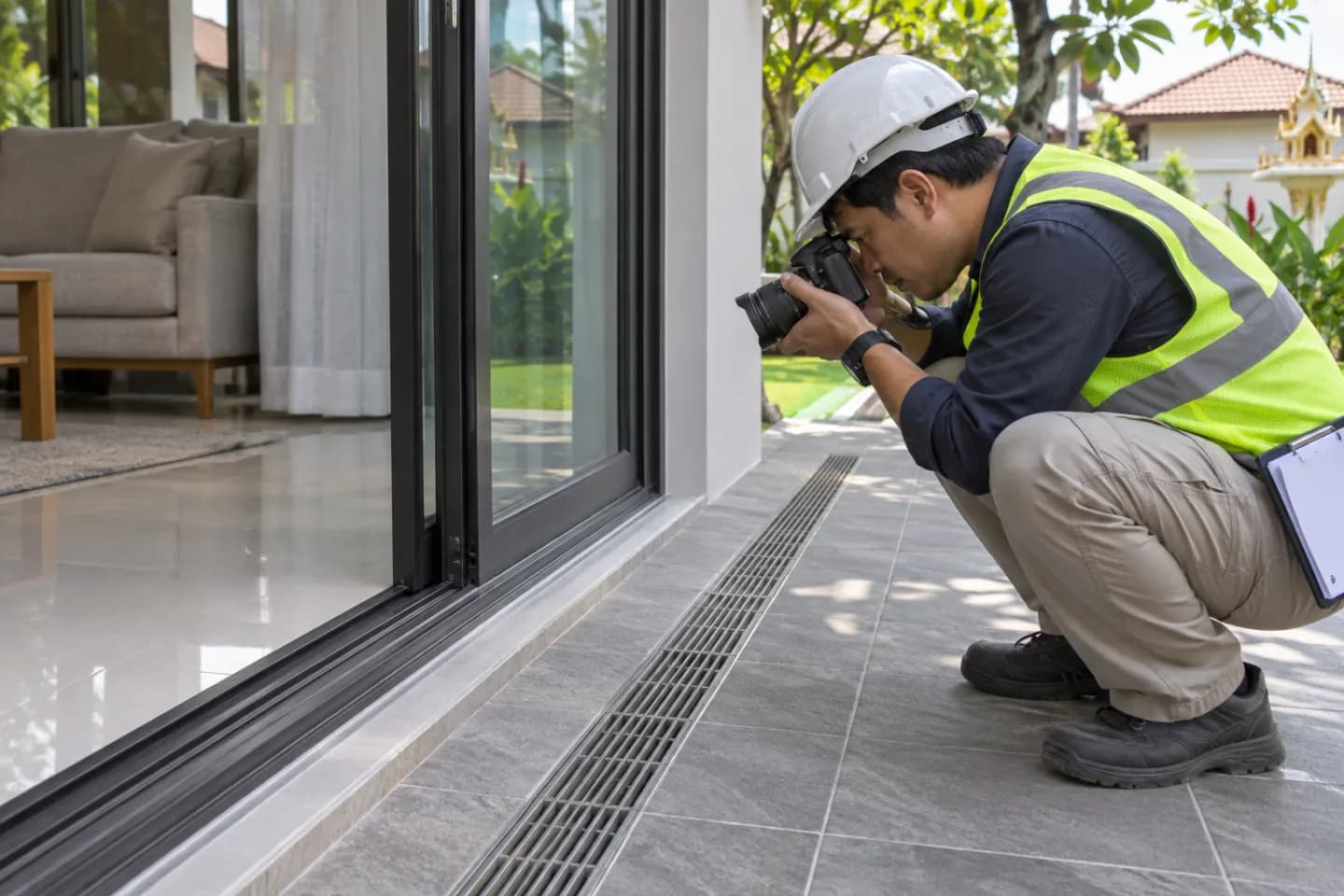
Start at the gate and walk around the outside with the plan. Trace where water should leave the site and where it could collect at doors, walls and the garage. Look for raised drain grates, blocked outlets, unfinished drain connections and a terrace that appears to fall towards the house. An authorised controlled water test can help an inspector distinguish slow discharge from a backwards fall or a leak at a junction. Agree the method with the inspector and builder so that a test does not damage unfinished work.
Inside, compare the position of stains with the room above or the exterior on the other side. Run fixtures with permission. Observe whether outlets drain, whether a cabinet remains dry underneath, and what happens when more than one fixture operates. At a shower, record where water remains after the agreed test and when the observation was made. A photograph taken after the surface has been wiped cannot establish that the underlying slope or connection works.
Record symptoms with the system still in the condition in which you noticed them. For example, “water emerges below the right side of the sink while the plug is released” is easier to investigate and repeat than “check plumbing.” For moisture or cracking that could have a structural or concealed cause, let the relevant professional identify what further examination is appropriate.
Second circuit: use the house as if you had moved in
Open and close doors and windows. Test all agreed locks and access devices with the developer. Check that windows latch without forcing and that sliding panels clear their tracks. Stand in the rooms where you expect to install furniture. A door that opens in an unexpected direction may consume the wardrobe space on which the layout depended. Put any variation against the signed design before agreeing a fix.
Have a qualified electrician verify the electrical installation and provide the appropriate test results. Ask for a labelled distribution board and a record of the protective devices and circuits. A switch that turns on a light tells you little about earthing or whether protective equipment works as intended. The buyer can confirm familiar user controls with permission, while testing that requires access to wiring or live equipment belongs with the professional.
For installed cooling or ventilation, operate each accessible system under agreed conditions and locate its filter, isolation and drainage points. A unit may cool a room while discharging condensation where it will damage joinery. A service demonstration should show where the owner can safely reach maintenance items after handover and what still needs to be commissioned.
Give every material defect a retest
There is room for a separate list of cosmetic items such as paint touch-ups. Keep entries affecting safety, water entry, access or commissioning prominent. For each material item, name the room or location, responsible party, agreed repair and date for retesting. A returned list with “done” beside every line is a response to the report. Close the line once the agreed evidence is available.
| Initial observation | Evidence and response | What closes the item |
|---|---|---|
| Water remains against terrace threshold | Photograph the area and record the test duration and weather. Have the cause assessed before accepting a sealant-only repair. | Repeat the agreed test after work and verify the outlet and threshold remain functional. |
| Sink cabinet becomes wet during draining | Mark the outlet used and the point where water appears. Identify whether the fitting, pipe or connection needs work. | Repeat the same drain test and check the cabinet stays dry. |
| Gate stops before it closes | Record the cycle and any obstruction and have the installer assess it. | Observe repeated normal operation and the installer’s demonstration of the safety functions. |
| Specification lists an item absent from the house | Attach the relevant signed page and identify the proposed substitution or omission. | Confirm agreed installation or document the accepted change and any price effect. |
Handover includes records you will need after the site team leaves
Before keys change hands, establish the status of repair items and what signing means under the agreement. Keep dated inspection sheets, repair acknowledgements, correspondence and copies of anything signed. Collect the relevant approved and as-built records where applicable, named equipment manuals, warranties with start dates, contacts for defects and the meter readings agreed at handover. Identify who will service shared equipment if the house is part of an estate.
If you bought through a developer before completion, the off-plan condo guide shows how plan and specification evidence can be recorded earlier in a different type of new-build purchase. For the house in front of you the last useful question is simpler: would another person be able to repeat the test from this entry and reach the same result? If the answer is yes, the repair record is ready to keep.
How this guide was prepared
oyopo prepared this buying guide using the linked records and guidance. Illustrative properties and figures are identified in the text. For an actual purchase, use the documents, measurements and professional advice for that address.