Bangkok · Buying an apartment
Buying a Condo in Bangkok
The listing says ‘five minutes to the BTS’. Start the clock at the condo gate. At On Nut, the entrance you need may be across Sukhumvit Road. The crossing, the lift down from your unit and the walk at the other end all count. Use the same approach inside the building. Measure the second bedroom, ask to see the pet rules and find out who pays for the lift repairs already approved.
The walk to the BTS
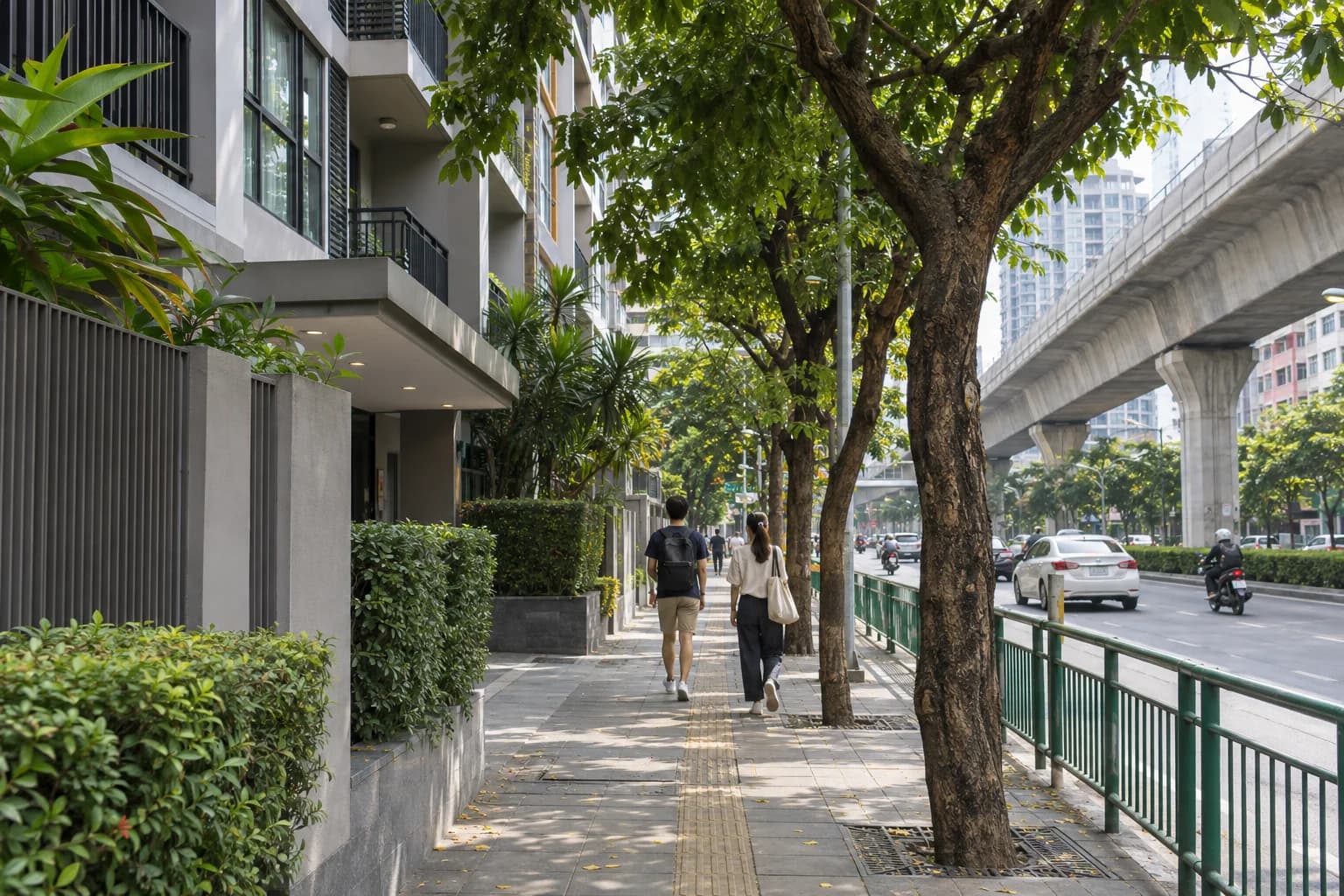
At a viewing, leave by the gate you would use every morning and walk to the station entrance. Note where you have to wait to cross. If the agent takes you through a second gate or a private passage, ask when it closes. For a building shuttle, ask for the timetable and check the last run back.
On Nut, Phra Khanong, Ekkamai, Thong Lo, Phrom Phong and Asok sit on the same BTS Sukhumvit Line. If you work near Asok and are weighing a condo in On Nut against one in central Sukhumvit, time both rides to your office door. For an MRT commute, walk the Asok–Sukhumvit interchange as part of the test.
On the way back, check the stretch you would walk after dark. A narrow soi with a blind bend or a section that floods is worth marking on the map. If you only have time for one repeat visit, make it at the hour you would normally come home.
Compare the trips you make each week as well as the headline commute. If you work near Asok three days a week and spend two evenings near On Nut, write down both journeys for each address. Time each leg from the front door. A station five minutes away makes little difference to the trips for which you still need a taxi or a long interchange.
Walk past the station once and find the places you would use on foot. On Sukhumvit, a supermarket that looks close on the listing map may require a crossing or a detour. If you are buying without a car, try bringing groceries back from the nearest shop during the viewing. You will find out where the pavement ends and whether the building entrance is awkward with both hands full.
| Area | Viewing check |
|---|---|
| On Nut | Walk from the actual gate to your station entrance. Check crossings, pavement and lighting after dark. |
| Phra Khanong or Ekkamai | Compare both sides of Sukhumvit Road. A building on the same side as your station entrance may have a simpler route. |
| Thong Lo or Phrom Phong | Check how far the building sits down its soi and whether you would rely on a shuttle. |
| Asok | Time the MRT interchange if you need it. Check bedroom noise with the windows open and closed. |
What’s outside the bedroom window?
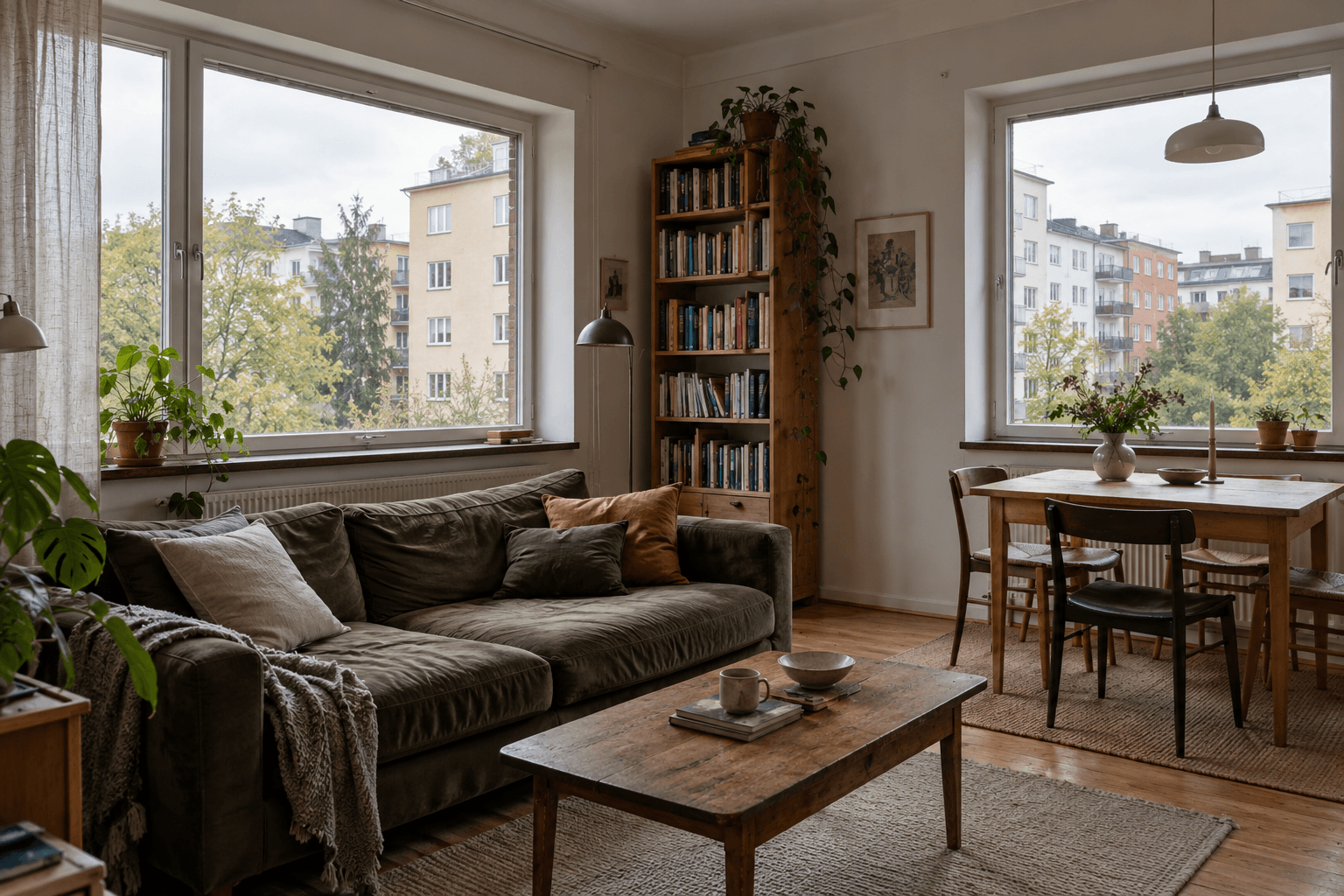
In a low-rise condo, start the viewing at the bedroom window. You might be level with the tree canopy, the car park ramp or the next building’s balconies. Turn off the lights and open the curtains. Can you use the room in daylight with the privacy you want? If the view depends on a vacant plot, ask what is known about plans for it.
On your way out, look for water marks along the corridor and around the car park ramp. Ask when they appeared. If the same leak turns up in two sets of owners’ meeting minutes, find out what was repaired and whether it has come back. In a building with one lift, ask how long it was out of service last time.
Ask to see the room when the car park or courtyard is in use. A bedroom above the ramp may be quiet on a weekday afternoon and hear engines or the barrier in the evening. For windows facing another block, check the view at night with the lights on inside. Note which curtains you would have to keep closed and which rooms would still get daylight.
Ask for the date of the last major waterproofing or lift work and the scope it covered. If the seller shows you a recently painted wall, look at the skirting and the back of nearby cupboards for swelling or visible moisture. Have an inspector examine anything that could affect your offer. The manager may also be able to tell you whether the same fault has affected other units on that side of the building.
Does the extra bedroom earn its space?
Bring the dimensions of the furniture you plan to keep. On the plan, mark the door swings and the space you need behind a desk chair. At the viewing, take a tape measure to the rooms whose dimensions decide whether you can move in as planned.
Ask for a dimensioned plan and confirm the registered unit area against the title documents. Compare price per square metre alongside the actual room sizes, especially if one unit has an internal staircase and the other is on one level.
A 65 m² two-bedroom might give you a separate kitchen and an office with a window. Another at the same size might devote more floor area to an entry corridor and squeeze the second room behind a sliding partition. On the plan, trace where a bed, wardrobe and chair would sit. Then check whether someone can open the wardrobe while another person is at the desk.
At a duplex viewing, spend a few minutes on the upper floor with the doors in their usual positions. Listen for television or kitchen noise from below and check whether the upstairs bedroom has its own cooling controls. Look at the stairs from the point of view of a child, an older visitor and whoever has to carry a laundry basket. If an upper floor was added after the original build, ask your lawyer to check what is documented and authorised.
Read and measure an apartment floor plan
- Two bedrooms. Draw the bed, chair and desk in the second room. Test whether the chair can pull out and the wardrobe and door can open. Look for an external window, suitable outlets and a place for air conditioning.
- Three bedrooms. Check how many people can use the kitchen and bathrooms at once. Work out which bathroom guests would use, where laundry dries and how much storage sits outside the bedrooms.
- Duplex. Walk the stairs and check headroom, handrails and lighting. Measure the turns if you need to move a mattress upstairs. Check how the upper level feels with the air conditioning running. Where there is a double-height void, compare the usable floor on each level with a similar single-level unit.
Get the pet rules in writing
Suppose the listing says ‘pet-friendly’ and you have an 18 kg dog. Ask management to confirm in writing that the dog can live in the specific unit. Request the current rules and check weight and breed limits, how many animals are allowed, and what registration costs. Do this before paying a reservation fee.
Walk the route management asks pet owners to use. If it goes through a service lift or car park, find out whether you can use it late at night. In the unit, check balcony gaps and window openings. Ask how exceptions are handled if the agent’s description differs from the written rules.
In a multi-tower development, ask which tower and common areas the approval covers. If you own two animals, give the manager both sets of details in one request. Check if the written approval has conditions, who can grant exceptions, and whether there is anything else to register after transfer. Keep that reply with the papers you review before signing.
The cheaper condo can cost more
A condo can look cheaper until you see the minutes approving a lift replacement. Ask for the latest common-fee invoice, the building budget and the written decision on any works already approved. Check the amount, the due date and who pays if the unit changes hands before then. Ask separately whether you owe a contribution to the building’s sinking fund.
In the example below, Condo A is ฿150,000 cheaper to buy. Immediate work and a building assessment put it ฿25,000 ahead of Condo B in first-year costs, before transfer charges and financing. Replace the example numbers with the actual fee notice and quotes for the work you would do after moving in.
Thailand’s Condominium Act addresses owners’ contributions to common expenses and requires a certificate concerning outstanding common expenses for transfer registration. Ask the seller when they will obtain it. Put any future assessment you have agreed to split in the sale agreement.
Put the common fee into annual baht before comparing listings. At a hypothetical ฿55 per m² per month, a 60 m² unit costs ฿39,600 a year in common fees. Ask whether the invoice uses the registered unit area and which charges are separate. Compare like for like by listing parking charges, the fund contribution and any assessment on their own lines.
For a lower-priced resale, identify what you would have to replace in the first six months. Price the air-conditioning units, apparent leaks and kitchen work separately. Then take the approved building works from the minutes and check them against the budget. A proposal still being discussed belongs in a separate column from a charge that has already been approved and is due.
| Cost | Condo A | Condo B |
|---|---|---|
| Asking price | ฿4,200,000 | ฿4,350,000 |
| Common fees for 12 months | ฿30,000 | ฿30,000 |
| Immediate work inside the unit | ฿140,000 | ฿25,000 |
| Approved assessment payable by buyer | ฿60,000 | ฿0 |
| Subtotal before transfer and financing | ฿4,430,000 | ฿4,405,000 |
Before the deposit, check the title and quota
If a seller says ‘foreign quota available’, ask for confirmation from the condominium juristic person for your proposed transfer. Thailand’s Condominium Act sets a general limit of 49% of the condominium’s total registered unit area for foreign ownership. The specific transfer and the buyer’s eligibility still have to be verified.
If you are buying through an eligible foreign-currency transfer or account, check the registration documents with your bank and an independent Thai property lawyer before sending the money. Ask which records the bank can issue and what the Land Office will need.
Have the lawyer check the title, seller’s authority and any registered mortgage. Ask what happens to your deposit if the seller cannot clear the mortgage or an agreed transfer condition fails. If the unit is off-plan, identify the exact plan and specifications attached to the contract and check the terms for delay or changes.
Ask early which documents are available now and which will arrive closer to transfer. A buyer comparing a resale with an off-plan unit needs different evidence. For resale, match the unit number and area in the contract to the title. For off-plan, use the contract plan to check the location, orientation and included fixtures, and ask for the payment schedule, handover terms and defect process in writing.
Keep a short list of conditions that would change your decision. For example, you might proceed only if the building confirms your dog in writing or the seller clears a registered mortgage at transfer. Discuss these before any payment and have your lawyer check how the contract records them, who has to provide evidence, and when the deposit is refundable.
Questions to take with you
- Measure the gate-to-station walk and the full door-to-destination journey.
- Record usable room dimensions, outlook, light, noise, storage and any internal stairs.
- Check lift access, planned works and written pet approval where relevant.
- Compare the purchase price, one-off charges, annual fees, immediate work and assessments.
- Verify the title, seller’s authority, tenure, outstanding charges, quota where applicable and deposit terms.
Bangkok condo viewing checklist
Complete a copy for each shortlisted unit. Date each observation and mark outstanding documents as pending.
View template questions
Location and commute
Record the building gate, BTS entrance and actual door-to-destination time.
Unit and building
Record room measurements, outlook, noise, lift access and the evidence for upcoming works.
Rules and first-year cost
Record written pet permission where needed, fee breakdown, assessments and repair estimates.
Ownership and transfer
Record who will obtain the title, common-expense certificate and quota confirmation if applicable.
How this guide was prepared
oyopo combines original architectural analysis with published information from architects and project teams. Sources identify the basis for project facts. The review date records the latest content check; design intentions and proposed facilities are distinguished from completed work. These articles are not site inspections or independent performance assessments.
Sources and further reading
BTS SkyTrain route mapShows the Sukhumvit Line station sequence and interchange.
Thailand Department of Lands: Condominium ActEnglish translation covering common expenses, foreign ownership and transfer registration.
Thailand government: registration documentsOfficial guidance on evidence for property registration by foreign buyers.