Apartment layouts · Explained
Single-aspect vs dual-aspect apartments: read the openings
Single-aspect and dual-aspect describe the directions an apartment faces. They are useful clues, but the labels do not establish daylight quality or cross-ventilation. Read the actual openings, the rooms between them and the conditions outside each façade.
What does dual-aspect mean?
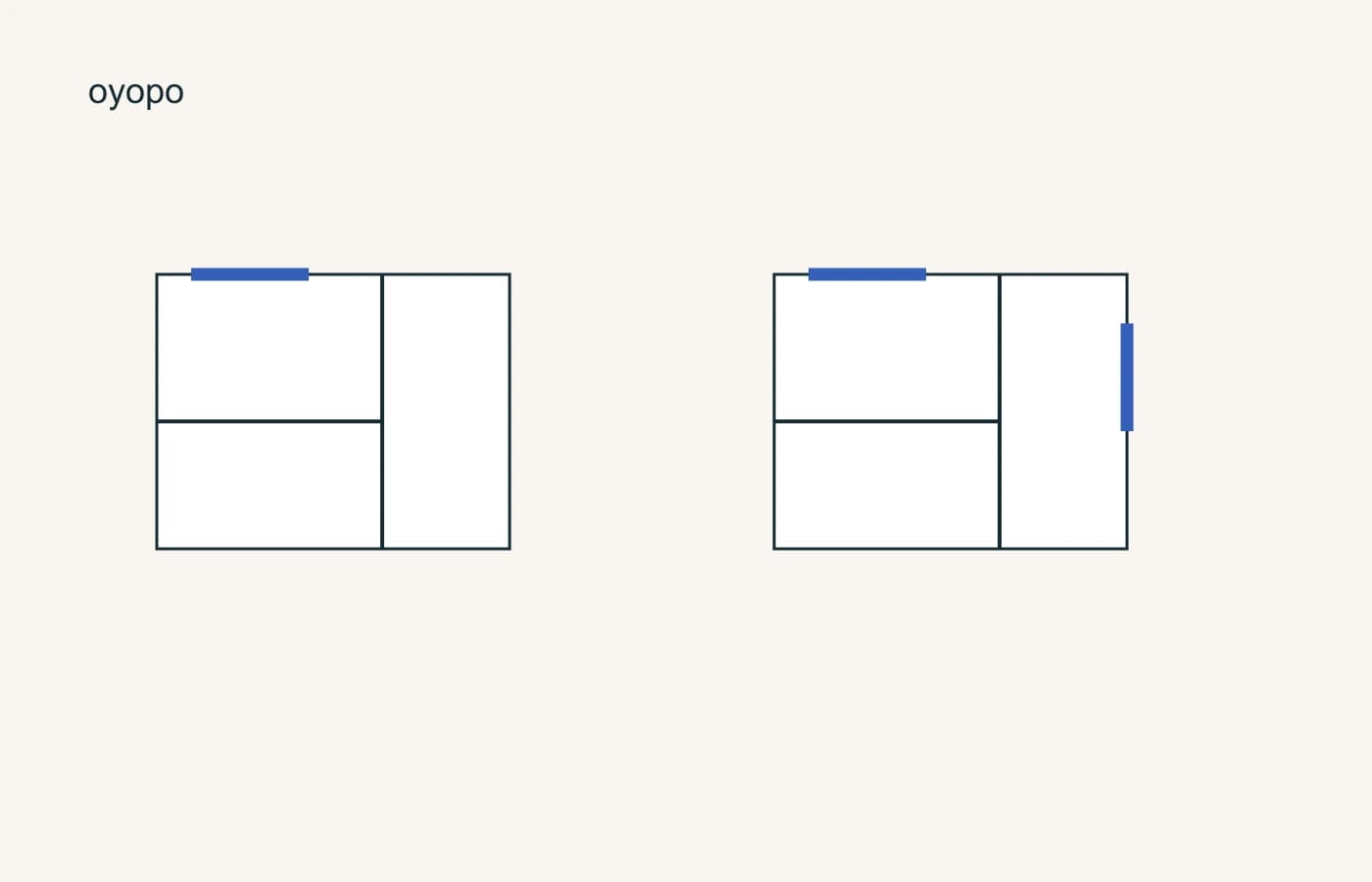
A single-aspect apartment has its main external outlook in one direction. A dual-aspect apartment faces two directions, which may be around a corner or on opposite sides. Two windows beside each other on the same façade do not create a second aspect.
For this reading exercise, mark external faces with a thick line and windows with a dot. Then label each dot fixed or openable. A corner home and a through-home both have two aspects, but their layouts can offer very different routes between openings.
| Arrangement | What to inspect |
|---|---|
| Single aspect | Depth from façade to the back of the home |
| Corner dual aspect | How the two faces meet and which rooms use them |
| Through dual aspect | The route between opposite external faces |
| Two windows on one face | Their spacing and the rooms they serve |
Add a north point before choosing a favourite
Your Home’s orientation guidance connects sunlight and wind to local climate. Its Australian examples need to be read in their southern-hemisphere context. A north-facing window in Melbourne does not have the same solar relationship as a north-facing window in Copenhagen.
Source: Your Home: Orientation
Mark morning, midday and afternoon against the plan. Then add neighbouring buildings and balcony overhangs if known. This gives you a set of questions to take to a sun study. It avoids declaring that two aspects are always better without considering whether either face receives useful light.
Two faces do not prove cross-ventilation
Your Home distinguishes intentional ventilation from uncontrolled air leakage and describes natural and mechanical approaches. An external window is only one part of a ventilation strategy.
Source: Your Home: Ventilation and airtightness
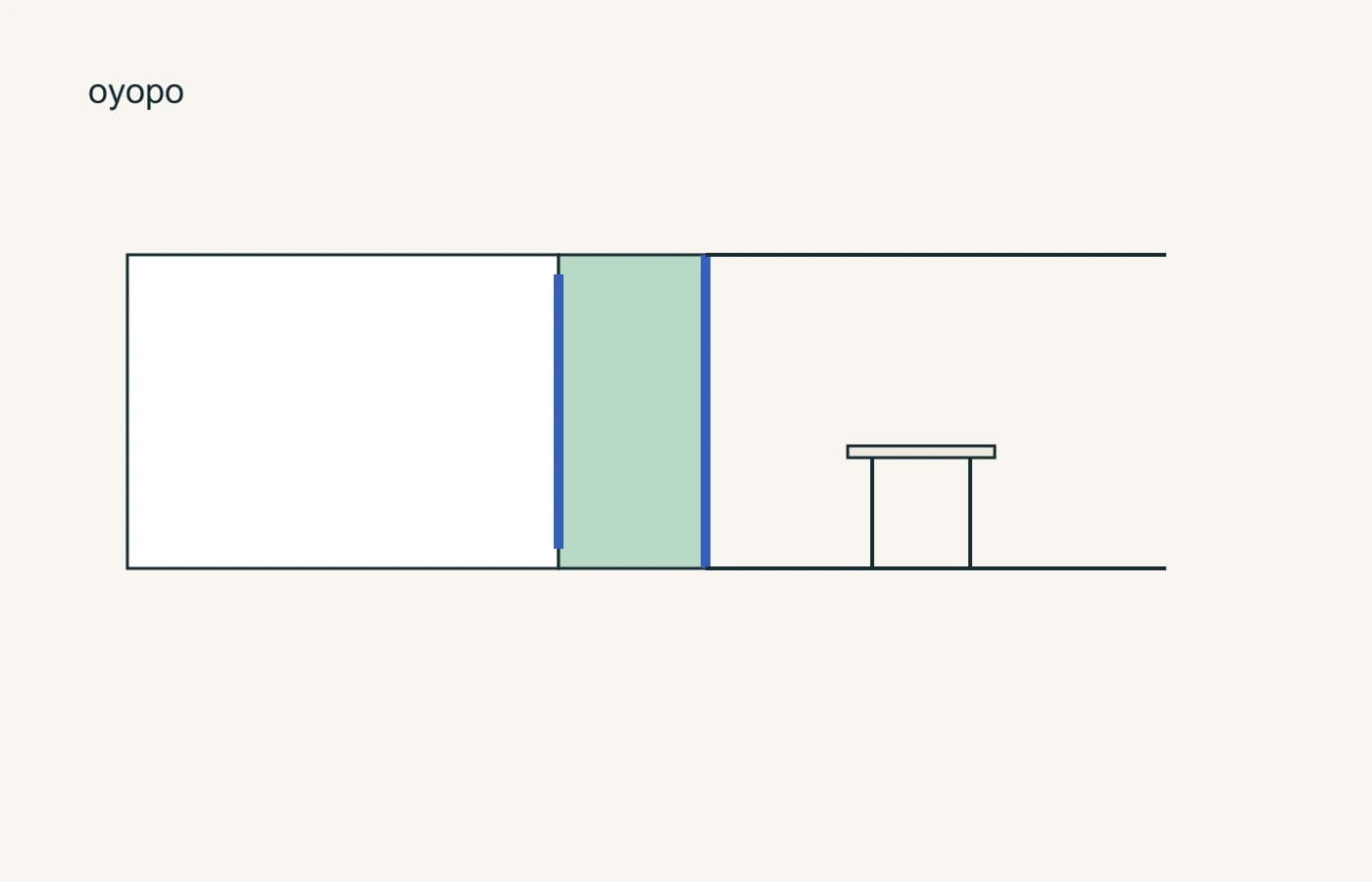
On the plan, draw a possible path between openable windows and check what interrupts it. A closed bedroom door may change the route; a fixed pane cannot be treated as an opening. This sketch identifies questions for the designer. It is not an airflow calculation and does not replace the ventilation design for the home.
Compare rooms, not only the apartment outline
A second aspect can belong to a bedroom while the living space still has a deep one-sided plan. Conversely, a compact single-aspect home may place its main occupied rooms close to a broad external face. Read each room in its own right.
There are also two outside environments to consider. A window may face a quiet courtyard, a busy road, another home or a service area. Ask whether it would be practical to open it at the times you expect to use the room. A plan gives geometry; a visit or site-specific evidence supplies the surrounding conditions.
Write a short evidence-based comparison
Use the same four lines for each apartment: external faces, openable windows, internal route and external obstruction. Leave a question mark where a drawing does not provide enough detail.
Then choose the one uncertainty most likely to change your view. It might be a window’s opening restriction, the shadow of another building or the need to keep a bedroom door closed. Resolve that point before treating the aspect label as a verdict on the whole home.
Questions to take with you
- Locate every external face and openable window.
- Read orientation in the correct hemisphere and climate.
- Trace possible air routes with bedroom doors closed.
- Ask for window details and site-specific daylight or ventilation information.
How this guide was prepared
oyopo combines original architectural analysis with published information from architects and project teams. Sources identify the basis for project facts. The review date records the latest content check; design intentions and proposed facilities are distinguished from completed work. These articles are not site inspections or independent performance assessments.
Sources and further reading
Your Home: OrientationAustralian Government guidance on orientation, local climate, sunlight and prevailing winds. Apply hemisphere and site context.
Your Home: Ventilation and airtightnessDistinction between intentional ventilation and uncontrolled leakage; natural and mechanical strategies.