Architecture · Construction detail
Mass timber moisture management: plan delivery, drying and enclosure
The timber a visitor sees after completion hides an earlier sequence of delivery, storage, erection and enclosure. Rain during construction is not by itself a complete account of whether a timber element is ready to be covered. The useful questions are where water can collect, how the assembly can dry and what evidence supports the next operation. This is a client’s reading guide to a project-specific moisture plan, not instructions for selecting moisture thresholds, diagnosing damage or releasing structural work.
When should moisture planning begin?
Set responsibilities before the timber arrives.
WoodWorks recommends planning moisture management before delivery and continuing it through construction. Trapped moisture at interfaces is a particular concern. Ask the team how its written plan addresses the supplied system.
Ask who owns the written plan and who can change it. Match delivery dates, lifting arrangements, temporary protection and enclosure work to the actual programme. If one contractor removes protection before another begins work, make the handover and responsibility explicit.
What must happen between delivery and installation?
Treat temporary storage as a designed part of the job.
A delivery date is useful only alongside a prepared receiving area, handling plan and agreed response if installation is delayed. Ask the team how packaging, supports and temporary cover will be managed for the supplied system. Do not assume a factory-applied finish provides every form of site protection.
Record who checks incoming elements and how an issue is photographed and reported. The client should know where the acceptance record lives, without trying to replace the supplier’s or engineer’s assessment. If the programme changes, ask whether storage and protection assumptions still hold.
Where could water be retained?
Review junctions and penetrations as well as broad surfaces.
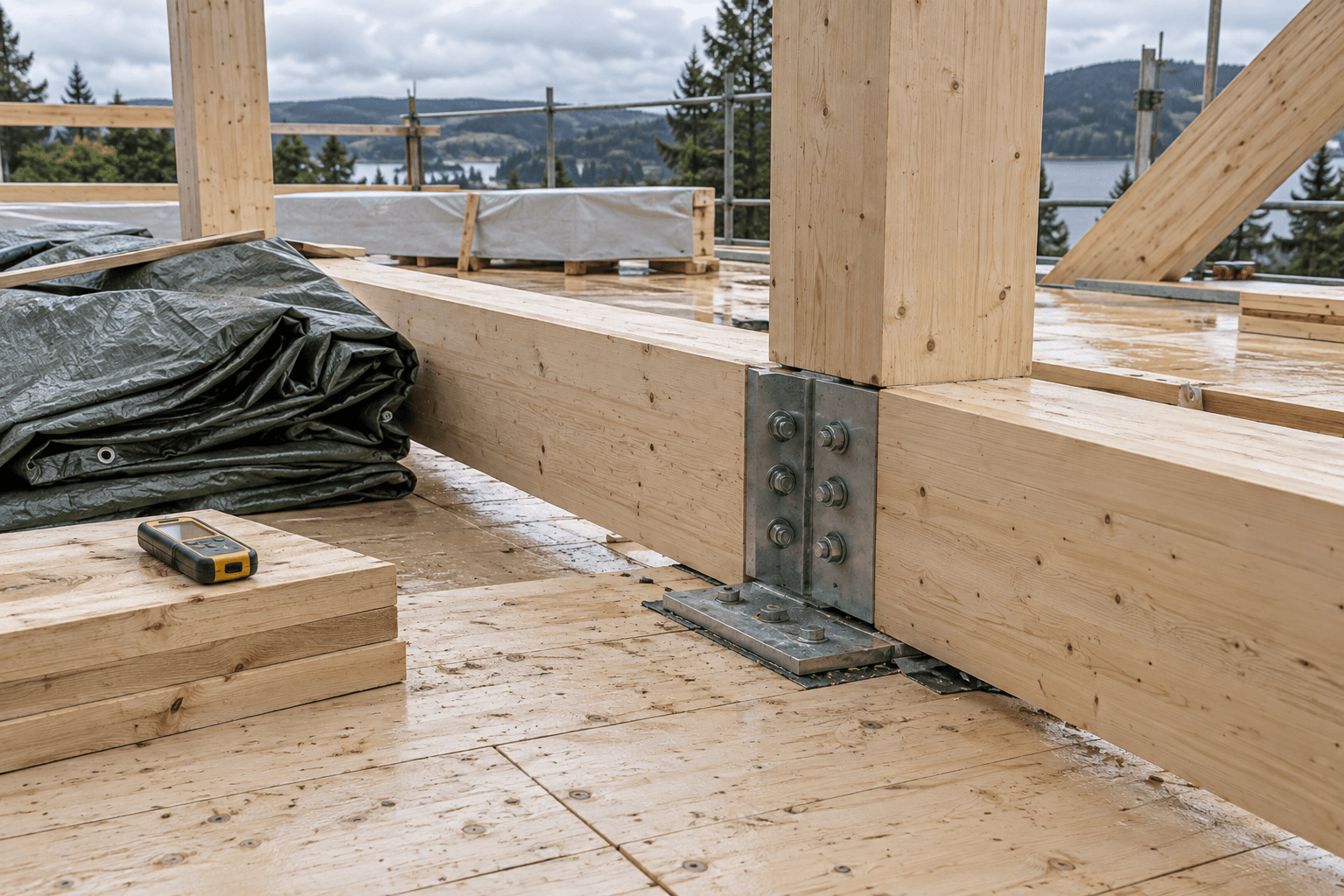
WoodWorks highlights deep wetting, trapped water and repeated wetting and drying. A dry-looking surface does not settle the condition of a concealed interface.
Use the actual detail drawings with the responsible specialists. Ask how temporary drainage, openings and exposed edges will be addressed; which areas are hard to inspect; and where records must be gathered before later layers restrict access. A generic photograph cannot answer those project questions.
| Stage or interface | Planning question | Record to request |
|---|---|---|
| Delivery and storage | Who checks condition and maintains protection? | Delivery inspection and named responsibility |
| Rain event | How is water removed and the response recorded? | Location-specific exposure and action record |
| Joints and penetrations | Where might water collect or be concealed? | Reviewed details and inspection locations |
| Before enclosure | Who decides readiness and on what evidence? | Documented release or unresolved hold |
| Programme delay | Which protection assumptions must be revised? | Updated plan with a new owner and date |
What does a useful monitoring record show?
Ask for location and trend, not an isolated number.
The USDA Wood Handbook discusses moisture-content determination and control during transit, storage and construction. It relates drying and handling to dimensional changes. Ask the project specialists how those general material principles inform this particular assembly’s monitoring plan.
Ask the project team to define the measurement method, locations, frequency and applicable criteria. Keep element identification, dates and relevant weather or work events together. This guide supplies no universal safe percentage: the product, assembly and intended next layer need their own professional requirements.
Who can authorise covering the timber?
Make the release decision visible and traceable.
The team needs a clear decision point before toppings, acoustic layers, roofing or finishes conceal the relevant timber. Ask which specialist reviews the evidence, what happens if criteria are not met and who is authorised to release the next operation. The programme should show that dependency.
Do not treat drying equipment, a remedial visit or a signed delivery note as proof of readiness. Ask for the actual conclusion and any conditions attached. If an area remains on hold, retain a marked location and owner so another trade does not accidentally cover the unresolved work.
Read mass timber as a structure combined with protective and separating layers
What should survive the construction phase?
Hand over the relevant records with the building information.
Ask which moisture-plan records, inspections and agreed remedial actions will form part of the completion information. An organised record helps explain decisions made before assemblies became concealed. It should identify the actual elements and conditions rather than being a folder of unlabelled site photos.
Discuss the completed building’s inspection and maintenance responsibilities separately. Operational leaks and later alterations are different events from construction exposure. The owner needs to know who to contact and what information to preserve if a new issue appears, without relying on an article to diagnose the timber.
Questions to take with you
- Identify the owner of the moisture plan before delivery.
- Coordinate storage, erection and protection with the programme.
- Map vulnerable interfaces and inspection access.
- Keep location-specific exposure and monitoring records.
- Use project-specific criteria set by competent specialists.
- Record authority to release each concealed layer.
- Retain the relevant decisions in the handover information.
Working brief: Mass timber moisture management: plan delivery, drying and enclosure
Record the actual property, evidence, responsible person and unresolved decisions. Keep private documents in your own secure files.
Roles and sequence
Who owns protection at each stage, including handovers and delays?
Vulnerable locations
Which interfaces need inspection before they disappear?
Monitoring and acceptance
What method, criteria and reviewer apply to this assembly?
Exceptions and records
What remains on hold, who resolves it and where is the final evidence?
How this guide was prepared
oyopo combines original architectural analysis with published information from architects and project teams. Sources identify the basis for project facts. The review date records the latest content check; design intentions and proposed facilities are distinguished from completed work. These articles are not site inspections or independent performance assessments.
Sources and further reading
WoodWorks: Mass Timber Moisture Management for ConstructionIndustry guidance on moisture risks, early planning, protection, monitoring and decisions before enclosure; product- and project-specific requirements still govern.
USDA Forest Products Laboratory: Drying and control of moisture contentWood Handbook chapter 13 (2021): moisture determination, drying, handling and storage. General material principles; no project acceptance threshold is inferred.