Project research · Evidence
Planned, under construction, completed: apartment stages explained
A project stage describes progress towards a building. It does not establish whether a home is available, ready to occupy or unchanged from an earlier design. Read the status label beside its source and date, then identify exactly which building or phase it refers to.
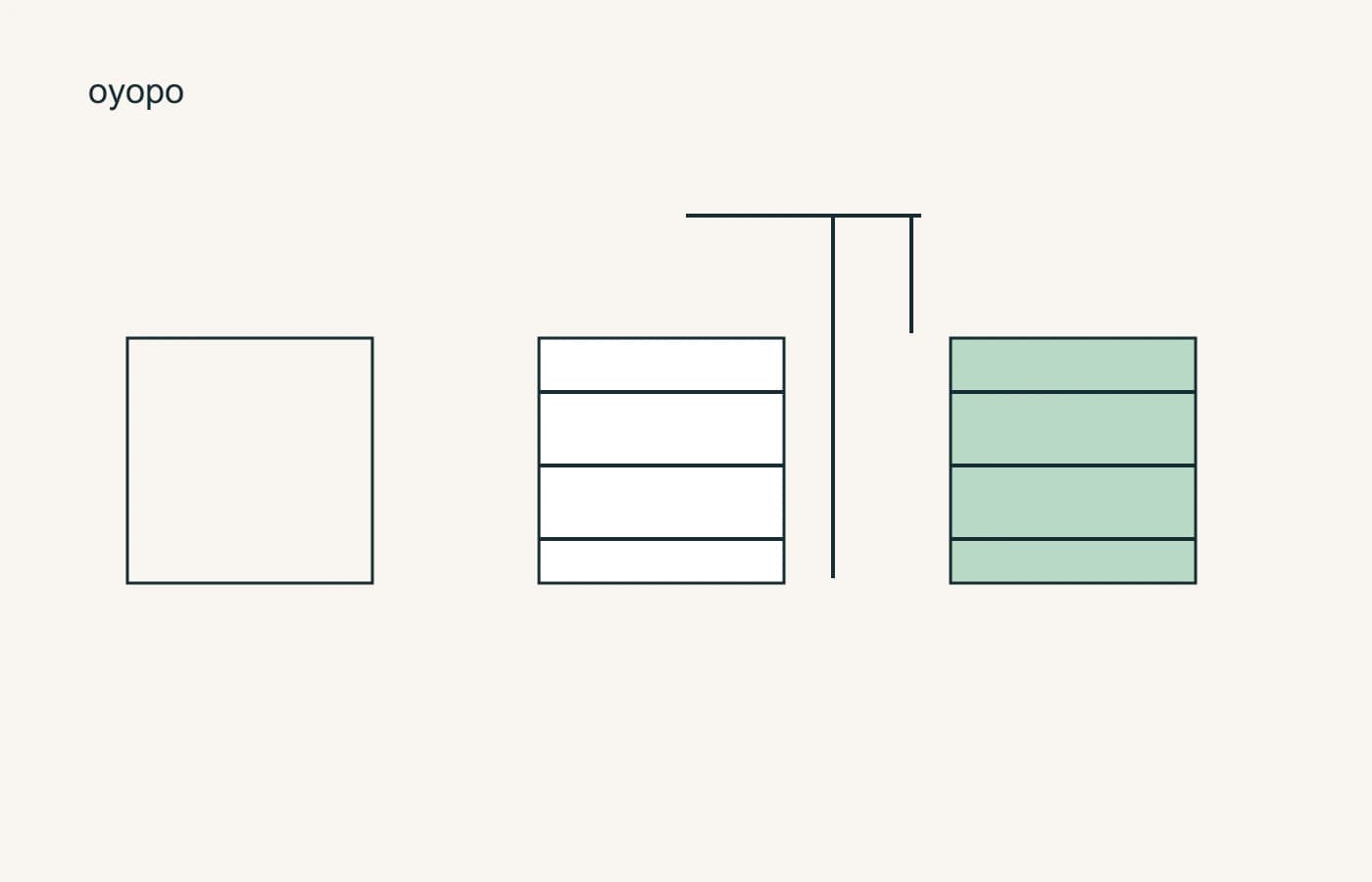
Four labels answer four different questions
For editorial research, oyopo uses “planned” for a documented proposal, “under construction” for a project with documented building work underway and “completed” when a suitable source records completion. “Unknown” means the evidence does not support a more specific current label.
These are research categories rather than a universal legal or construction classification. They help organise information, while the underlying project evidence supplies the detail. A different source may use “launched”, “coming soon” or “now selling” to describe a commercial event rather than physical progress.
| Label | What to look for | What it does not establish |
|---|---|---|
| Planned | A documented proposal and its date | Construction has started |
| Under construction | Dated evidence of work on the relevant building | A confirmed moving-in date |
| Completed | A suitable source recording completion | Current availability or every unit’s condition |
| Unknown | An explicit gap in current evidence | Cancellation or lack of activity |
Topping out is a milestone, not the whole building
Mirvac has published a topping-out announcement dated 22 September 2026 for Trielle at Yarra’s Edge. A structural milestone is useful progress evidence, but it should not be silently converted into a statement that every apartment, shared facility or external area is finished.
Source: Mirvac: Trielle tops out
When reading any milestone, ask what was achieved: the structure, façade, fit-out, services or a particular public space. Different parts of a project can progress on different schedules. Use the source’s own scope and date rather than extending the headline to every part of the development.
Match the update to the right building
Mirvac’s Yarra’s Edge history records several buildings delivered over different years, including Voyager’s completion in 2021 and construction commencing on Trielle in 2024. One precinct name therefore covers multiple stages of physical development.
Source: Mirvac: Yarra’s Edge precinct
Write down the building name, tower or stage identifier and address before collecting an update. If a press release mentions a wider precinct, check whether its milestone applies to your building or another part of the site. This prevents a completed earlier phase from being used as proof for a later proposal.
A forecast and an observation are different evidence
A statement that completion is expected in a future year is a forecast. A later statement that the building has been completed records a different kind of event. Keep both dates if they explain the history, but use the newer suitable evidence for the current stage.
An undated page that still says “coming soon” is weaker evidence of current progress than a clearly dated project update. If sources conflict, preserve the uncertainty and seek clarification. An absent update does not by itself prove that work stopped.
Research the building and the available home separately
Your Home explains off-the-plan apartments through plans, specifications and a building that has not yet been completed. That setting makes it especially important to identify the particular home and the documents that describe it.
Source: Your Home: Buying an apartment off-the-plan
For a current enquiry, record two separate lines: the project’s documented physical stage and the provider’s dated information about the home. A finished building may have no available apartments; an unfinished one may have none left to offer. Questions about a specific transaction need the current provider documents and the appropriate professional review.
Questions to take with you
- Match the source to the exact building or phase.
- Record both the event date and the date you checked it.
- Distinguish a forecast from a recorded milestone.
- Keep physical progress, occupancy and availability as separate questions.
How this guide was prepared
oyopo combines original architectural analysis with published information from architects and project teams. Sources identify the basis for project facts. The review date records the latest content check; design intentions and proposed facilities are distinguished from completed work. These articles are not site inspections or independent performance assessments.
Sources and further reading
Your Home: Buying an apartment off-the-planAustralian Government introduction to plans, specifications and unfinished apartments. This article discusses evidence and design, not individual contract or financial advice.
Mirvac: Trielle tops outDated construction milestone; topping out does not establish completion or occupancy.
Mirvac: Yarra’s Edge precinctDeveloper’s precinct history, Voyager completion and Trielle construction commencement. Current availability is separate.