Vancouver · Heritage and housing
The Butterfly, Vancouver: a new tower beside an old church
A new residential tower and a historic church occupy very different positions in a city. At The Butterfly in Vancouver, they form parts of one development. The architectural story is in the connections: where the buildings meet, how their routes separate and what remains legible of each.
Read the parts before reading the silhouette
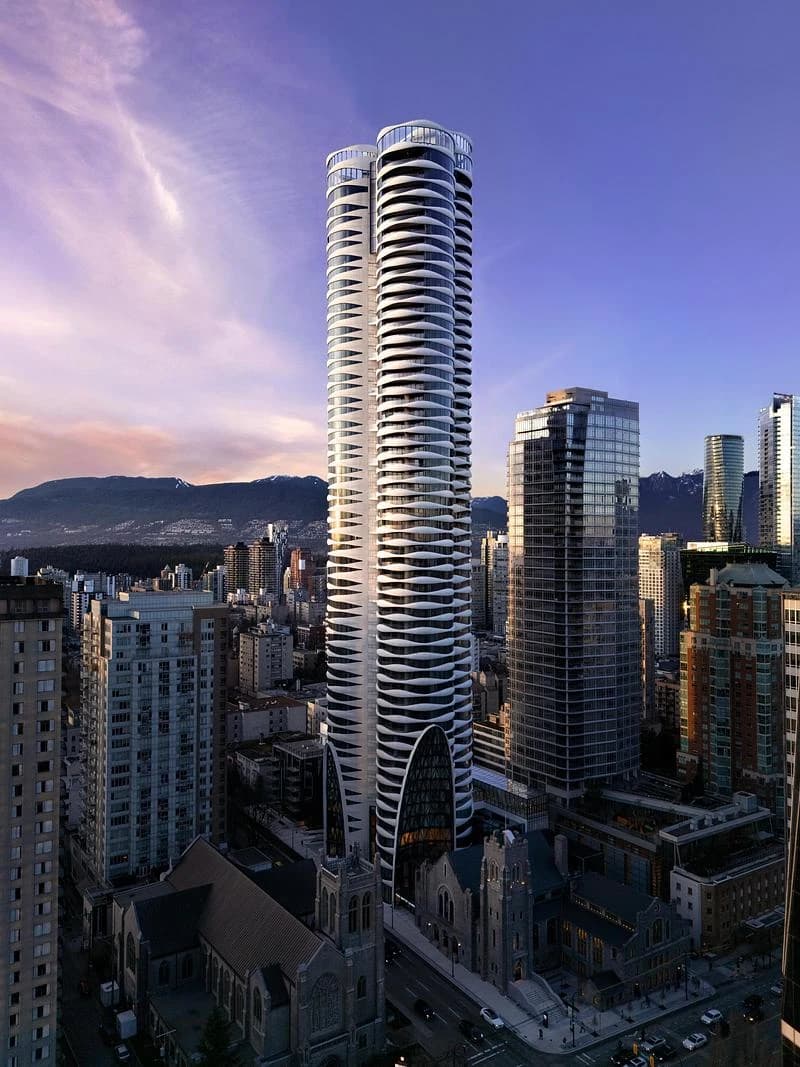
Revery’s project account places The Butterfly tower alongside the rehabilitation and expansion of Vancouver’s First Baptist Church, originally built in 1911. It describes residential, heritage and community programmes within the wider development.
Source: Revery Architecture: The Butterfly
A skyline photograph gives these parts very different visual weight. For a closer reading, start with a ground-level plan and label each programme. The quieter existing building can be central to the organisation of a site even when a new tower dominates the distant view.
| Relationship | Drawing or question |
|---|---|
| New tower and existing church | A site plan showing both footprints |
| Residential arrival and community arrival | Which doors and routes serve each? |
| Shared base and separate programmes | Where do connections occur? |
The meeting point matters more than a visual match
Look at the ground between the new and existing buildings. Is it an entrance, a passage, a forecourt or a sequence of different spaces? Then examine changes of level and the way a visitor can identify the right destination.
A successful architectural discussion does not require the two buildings to look alike. Their relationship can be tested through alignment, access and the space left between them. This is a reading framework; it is not a claim about the heritage approval or conservation outcome.
Shared arrivals introduce a second scale
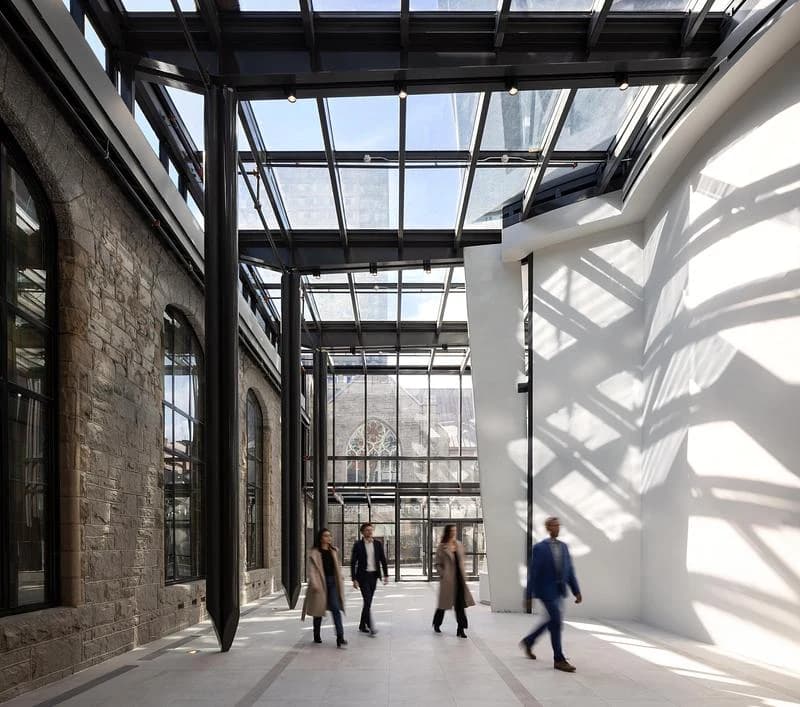
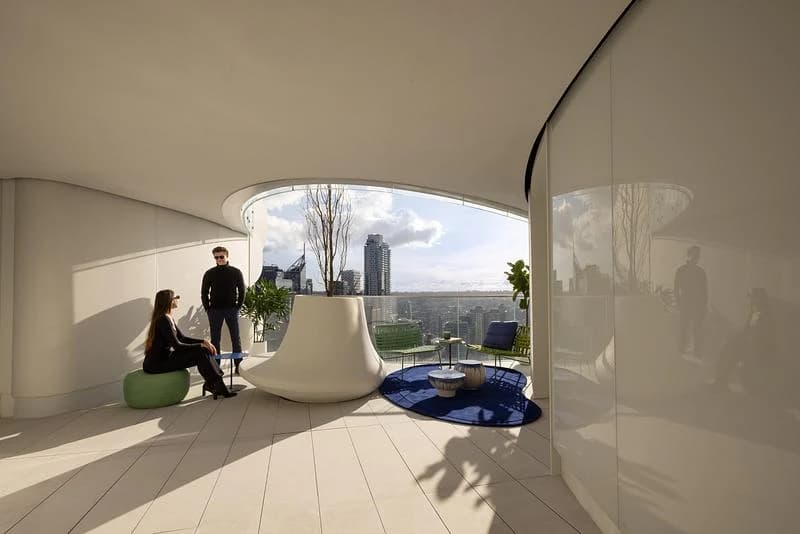
The architect describes outdoor sky gardens on residential levels. They introduce shared spaces within the tower, while the church and other programmes connect the development to a broader setting.
Source: Revery Architecture: The Butterfly
Compare those two scales without treating them as interchangeable. A residential arrival, a community room and a place of worship serve different groups and routines. Ask who approaches each space, how they arrive and where the next threshold sits.
Use the current project stage, not an old promise
Revery’s current project page lists the development as completed in 2026. That is the architect’s recorded stage, distinct from earlier images or statements about what the finished development would provide.
Source: Revery Architecture: The Butterfly
Keep that attribution beside the date. Completion does not establish the current operation of every associated programme or describe every individual apartment. For a specific visit or enquiry, the relevant organisation or provider needs to supply current information.
A development can have several civic addresses
The transferable question is how one site can accommodate different kinds of arrival while allowing an older building to remain understandable in its own right. Draw the route of a resident and the route of a visitor to the church.
Then add a third route for another programme. The exercise reveals why the base of a large development deserves as much attention as its silhouette. It also keeps a broad promise of “community” connected to actual spaces and destinations rather than treating it as an automatic outcome of density.
Questions to take with you
- Identify the existing building and its separate role.
- Read the development from street level as well as the skyline.
- Distinguish residential shared spaces from community programmes.
- Record the source behind the completion date.
How this guide was prepared
oyopo combines original architectural analysis with published information from architects and project teams. Sources identify the basis for project facts. The review date records the latest content check; design intentions and proposed facilities are distinguished from completed work. These articles are not site inspections or independent performance assessments.
Sources and further reading
Revery Architecture: The ButterflyArchitect’s primary account. Lists completion in 2026 and identifies the residential tower, First Baptist Church rehabilitation and associated community programmes. Performance language is not treated as independent measurement.
Revery / v2com: The Butterfly press kitOfficial project press kit and individually credited photographs used for this editorial article. No gated high-resolution files accessed.